What the New Home Affordability Bill Means for Atlanta Buyers in 2026

On July 11, 2026, something big happened in housing policy, and most Atlanta buyers and sellers didn't even know about it yet. The 21st Century ROAD to Housing Act quietly became law without a presidential signature, and it's the most significant piece of federal housing legislation in years. After Over 20 years in real estate, I've learned that the bills Congress passes today shape the market you're buying or selling in tomorrow. So let's break down what this one actually does, and what it doesn't, so you can plan accordingly.
How Did This Become Law Without a Signature?
Here's something most people don't realize: under the U.S. Constitution, if the President doesn't sign or veto a bill within 10 days (excluding Sundays) of receiving it, it automatically becomes law, as long as Congress remains in session. President Trump chose not to sign the bill in protest over an unrelated piece of legislation, but he also didn't veto it. So after the 10-day window expired, it became law on its own. The Senate passed it 85–5 and the House passed it 358–32. That's about as bipartisan as it gets.
Key Provisions: What the Act Actually Does
This isn't a headline-grabbing giveaway. It's a structural bill that addresses the supply side of housing, which is where the real affordability problem lives. Here are the main pieces:
Limits on Large Institutional Investors
The act restricts large institutional investors from purchasing additional qualifying single-family homes if they already own 350 or more. The goal is to give individual buyers a better shot in competitive markets where Wall Street has been bidding against families. There are exceptions for build-to-rent communities and affordable housing programs, so this isn't a blanket ban. It's a targeted restraint.
Faster Home Construction
The bill streamlines federal environmental review and permitting processes to help builders get new housing developments out of the ground faster. It also provides grants for pre-approved housing designs (think accessory dwelling units, duplexes, and other "missing middle" housing), with 10% of that funding earmarked for rural areas. Fewer bottlenecks means more homes on the market sooner.
Support for Manufactured and Modular Housing
Manufactured and modular homes are generally less expensive to build and buy, but outdated federal regulations have kept them from being a bigger part of the solution. The act eliminates the permanent chassis requirement for manufactured housing and gives HUD authority over energy-efficiency standards, making it easier to get these homes into communities where they're needed.
HUD Modernization
The act updates older federal housing programs to make financing and development more efficient while reducing regulatory burdens. It expands FHA loan limits (including for manufactured housing and multifamily loans) and creates a small-dollar mortgage pilot program for loans under $100,000, which could help buyers in more affordable price points access financing.
Encouragement for Local Housing Growth
Creates incentives for state and local governments to expand housing supply and address restrictive land-use practices. Communities that take steps to allow more housing (whether that's reforming zoning, reducing parking minimums, or streamlining local approvals) will have an easier path to federal housing funding.
What the Act Does NOT Do
This is the section most people are looking for, so let me be direct. There's a lot of noise out there about what this bill "gives" homebuyers. Here's the reality:
It does NOT lower mortgage interest rates. The 30-year fixed is still sitting just above 7%, and this law doesn't touch that.
It does NOT create a national first-time homebuyer down payment grant. There's no check in the mail.
It does NOT forgive mortgage debt. If you owe $300K, you still owe $300K.
It does NOT cap home prices or rents. This is a supply-side bill, not a price control bill.
It does NOT provide an immediate tax credit for all homebuyers. There's no new $15,000 credit coming.
What it does do is attack the root of the affordability crisis from the supply side, by making it easier to build more homes, reducing investor competition in certain segments, and modernizing federal housing programs. These are long-term structural changes. The effects will be real, but they'll roll out over years, not overnight.
What This Means for Metro Atlanta
Now let's talk about what matters to you: how does this affect the Atlanta market specifically? Here's my read after Over 20 years of watching this market move:
More Inventory Over the Next Few Years
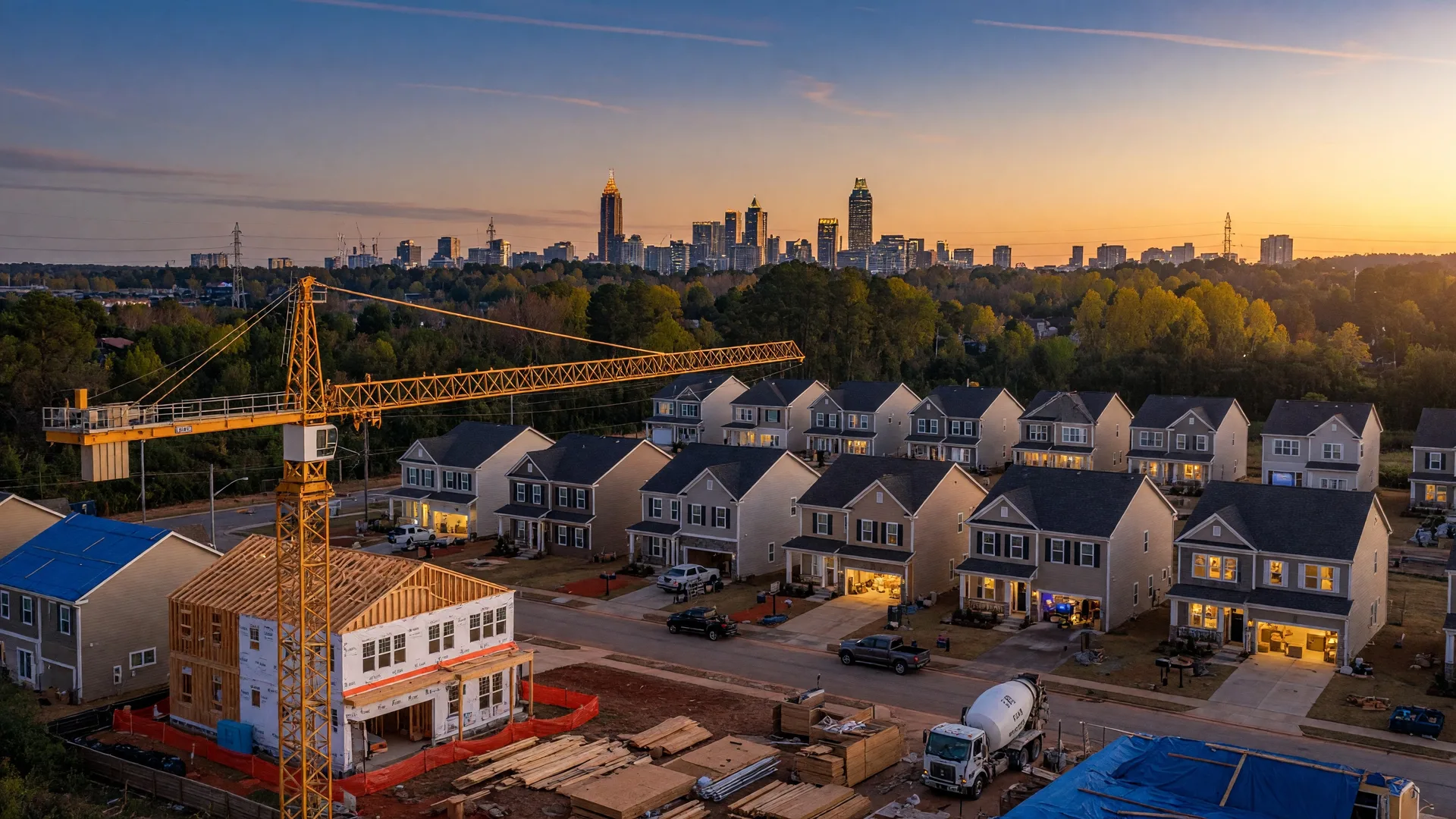
Metro Atlanta is one of the fastest-growing regions in the country, and new construction is already active in suburbs like Alpharetta, Cumming, South Fulton, Woodstock, Canton, and McDonough. Streamlined permitting and pre-approved design grants mean more homes coming to market in these areas. If you've been frustrated by limited options, that's going to improve.
Less Competition from Large Investors
The institutional investor restrictions won't eliminate competition from investors entirely, but in some segments of the single-family market, especially starter homes and mid-range properties, individual buyers should start to see a more level playing field. Cash offers from large corporate buyers won't disappear, but they may become less dominant.
No Immediate Reduction in Monthly Payments
Let's be real: mortgage rates remain the biggest affordability challenge. This law doesn't touch rates. If you're buying a $450K home today, your monthly payment is still going to reflect today's rate environment. The relief this bill provides is in supply and competition, not in your monthly mortgage statement.
Continued Opportunities for Builders
For builders and developers, this is a significant tailwind. Faster permitting, pre-approved designs, and modernized FHA financing create real momentum for new projects, especially in fast-growing Metro Atlanta communities where demand is already strong.
What Should Atlanta Buyers Do Right Now?
Here's the bottom line: the 21st Century ROAD to Housing Act is a meaningful step toward fixing the structural supply problem in American housing. But it's a long-term solution, not an overnight fix. If you're thinking about buying or selling in Metro Atlanta in the next 12–24 months, here's what I'd focus on:
Have a Plan, Not Just a Wish
Whether you're a first-time buyer waiting for "better conditions" or a seller wondering if now is the right time, get the data. Know your equity, know your buying power, and make the decision that fits your timeline.
Watch the New Construction Pipeline
More supply is coming, especially in the suburbs. If new construction is part of your strategy, now is a good time to get familiar with what's being built and where. Builders are also offering incentives like rate buydowns right now.
Don't Wait for Perfect
Every year someone waits for rates to drop or prices to fall, they're competing against the same market forces everyone else is. The smartest move is the one that's right for your situation today, not the one that might be right for a theoretical future market.
I've been helping buyers and sellers navigate Metro Atlanta for over two decades. I've seen legislation come and go, rates rise and fall, and markets shift under our feet. The constant is this: the people who plan and work with someone who knows the market come out ahead.
If you want to talk through what this means for your specific situation, whether you're buying your first home, selling a property, or thinking about a move-up strategy, I'm available. Let's get you a plan.
Frequently Asked Questions
Does the new housing law lower mortgage rates or give me a down payment grant?
No on both counts. The 21st Century ROAD to Housing Act does not lower the 30 year fixed mortgage rate, which is still just above 7%, and it does not create a national down payment grant or a check in the mail. Its focus is supply: more homes built, faster construction, and modernized federal housing programs.
How do the limits on big investors help me as a home buyer?
Large institutional investors who already own 350 or more single family homes can no longer keep buying qualifying homes. That removes some of the competition individual buyers face in markets like Atlanta. It is not a blanket ban, so it will not empty the market, but over time it gives families a fairer shot at homes that investors used to snap up.
Will the law actually change the Atlanta market anytime soon?
Not overnight. The permitting, construction, and local land use changes take years to add real inventory, and the investor limits roll out gradually. The Atlanta market will still move with rates, jobs, and demand in the meantime. Think of the bill as a long term tailwind, not a reason to change your plans today.
Does this law change anything for me as a seller?
There are no new seller side requirements or tax changes in the bill. How your home is priced, presented, and marketed still decides how quickly it sells. If the law succeeds in adding more housing over the next several years, Metro Atlanta could see a softer pricing environment, which makes realistic pricing and steady follow through more important.
What is the small dollar mortgage pilot included in the law?
The act creates a pilot program for mortgage loans under $100,000, which are hard to get because most lenders prefer larger loans. It can open the door for buyers at more affordable price points and is a sign that FHA is working to make small balance financing practical in markets like Atlanta.
Should a first time buyer wait for the benefits of this law to arrive?
Waiting is usually not the answer. The bill does not cut rates or create a grant that changes your monthly payment, so the market you can buy in today is not going to shift because of this law. Get pre approved, buy the home that fits your budget and your life, and let added supply over time become the bonus it was meant to be.
Ready to Talk Through Your Options?
Whether you're a first-time buyer, a move-up seller, or an investor, I'll give you an honest assessment of where you stand and what your best move looks like. No pressure, no gimmicks. Just a plan that fits your situation.
Tommy Williams · Bailey Heritage Homes · License #287291 · Atlanta Metro