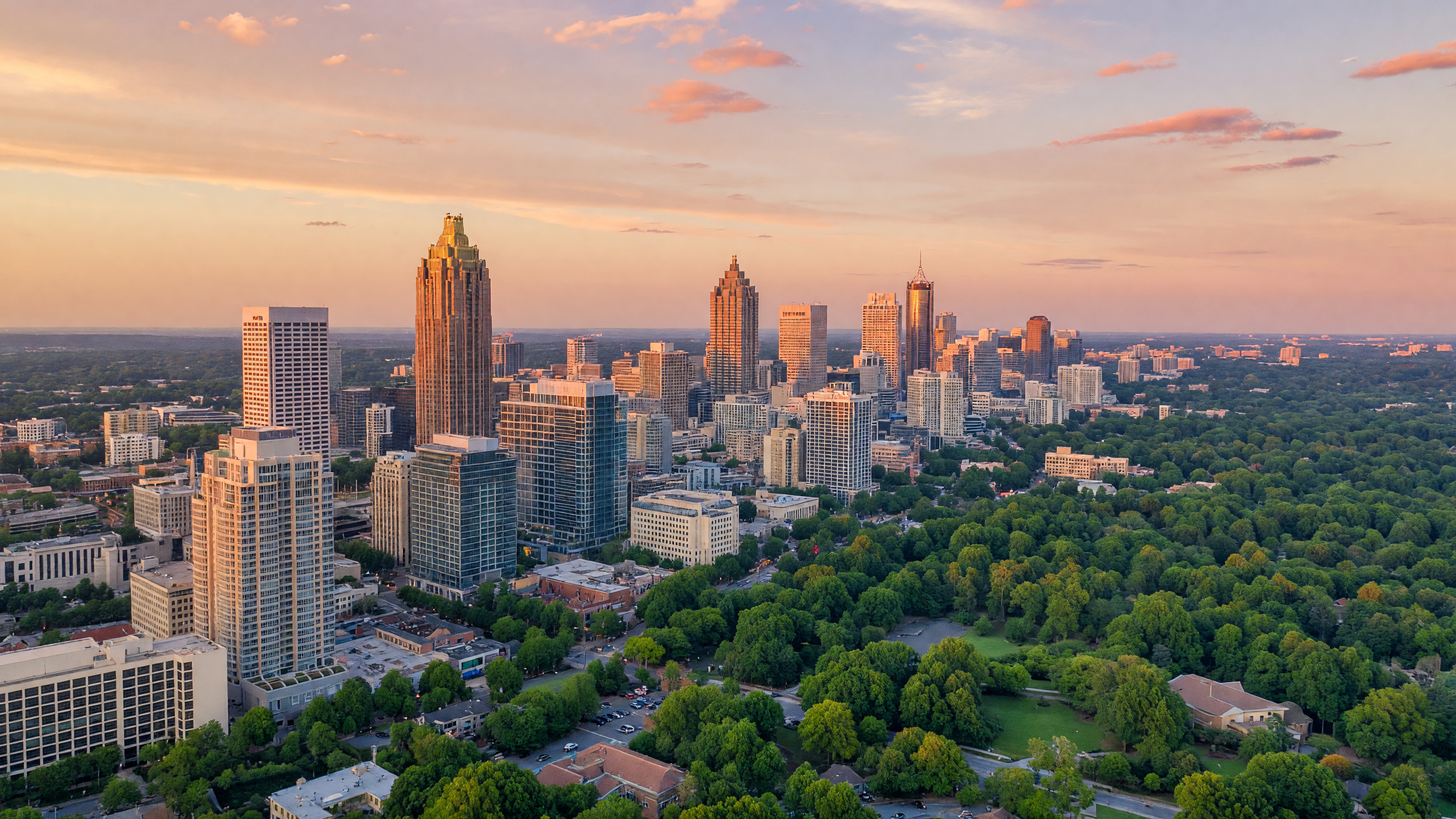
Living in Atlanta
Pros, Cons, Prices & Appreciation: everything you need to know about making Atlanta home.
What it's like to live in
Atlanta.
Atlanta is the economic and cultural engine of the Southeast — a sprawling metro of over 6 million people anchored by one of the most recognizable skylines in the country. But Atlanta isn't one city; it's dozens of distinct neighborhoods stitched together by tree canopy, history, and ambition. From the high-rises of Midtown to the bungalows of Inman Park, from the energy of East Atlanta Village to the quiet dignity of Druid Hills, Atlanta rewards the person who takes the time to learn its layers. With Over 20 years in this market, I can tell you that the people who do well here — buyers and sellers alike — are the ones who understand that Atlanta moves at its own pace, and the payoff is worth it.
What is it like to live in Atlanta?
Every metro Atlanta town has its own rhythm. Here is the honest picture of daily life in Atlanta: the commute, the schools, the cost of living feel, and what actually fills a weekend. If it matches how you want to live, I'm available to help you find the right street.
The commute to Atlanta
- To the city: 10–25 minutes from intown neighborhoods; 35–60+ minutes from outer suburbs depending on traffic
- Transit: MARTA rail covers the north-south and east-west corridors. Five Points is the central hub. BeltLine transit is in development.
- Getting around: I-75, I-85, I-285 (the Perimeter), I-20 — Atlanta's highway network is extensive but congested during peak hours
Schools and family life
- Decatur City Schools , 10/10 GreatSchools average (Public — Top District)
- Atlanta Public Schools ( select ) , Varies widely by cluster (Public — Magnet Options)
- The Westminster Schools , Elite private (Private — K-12)
- The Lovett School , Top-tier private (Private — K-12)
A good fit for: Young Professionals, Move-Up Buyers, Investors, Relocating Families.
The cost of living feel
- Homes: median around $429,000, about $284 per square foot.
- Renting: typical rent around $1,995/mo.
- Owners vs renters: Roughly 55% owner-occupied, 45% renter-occupied within city limits. Renter share is highest in Midtown, Buckhead, and West Midtown — making those areas attractive for buy-and-hold investors.
Dining, parks, and community character
- Parks & Outdoors: Piedmont Park — 185 acres of green space in Midtown
- Dining & Nightlife: Ponce City Market — food hall + retail on the BeltLine
- Culture & Entertainment: High Museum of Art — Southeast's premier art museum
An honest housing snapshot
- Condo / Townhome: $200K – $450K. 1–2 bed condos in Midtown or Buckhead; townhomes in emerging neighborhoods like Vine City and West End.
- Single-Family Home: $350K – $750K. 3–4 bed homes in established neighborhoods like Kirkwood, East Atlanta, and Decatur-adjacent areas.
- Luxury / Custom: $750K – $2M+. Buckhead estates, Midtown high-rise penthouses, and custom builds in Druid Hills and Ansley Park.
Price bands are general ranges, not promises. Every block in Atlanta is different, which is exactly why an honest local read matters before you make an offer.
Why people love
Atlanta.
World-class job market
Atlanta is home to 16 Fortune 500 companies — including Coca-Cola, Home Depot, UPS, and Delta Air Lines — plus a booming tech sector. The Atlanta Tech Village and BeltLine-driven startups have added thousands of jobs in the last five years.
Diverse neighborhoods for every lifestyle
Want a walkable urban core? Midtown and Old Fourth Ward deliver. Prefer tree-lined suburban streets? Brookhaven, Decatur, and Virginia-Highland have you covered. There is no single 'Atlanta experience' — that's the point.
Relative affordability vs. peer cities
Atlanta's median home price (~$429K) remains well below New York, Los Angeles, Austin, and Denver. For a major metro with this job market and cultural infrastructure, the value proposition is strong — especially in emerging neighborhoods.
Cultural depth and food scene
From James Beard Award-winning restaurants to the BeltLine's art installations, from the High Museum to Center Stage theater, Atlanta's cultural offerings rival cities twice its size. The food scene alone — particularly in Buford Highway's international corridor — is world-class.
Hartsfield-Jackson International Airport
The busiest airport in the world gives Atlanta residents unmatched connectivity for business and leisure travel. Direct flights to virtually anywhere on the planet, and it's just 15 minutes from downtown.
Strong appreciation in emerging neighborhoods
While core neighborhoods have appreciated steadily, emerging areas like East Point, South Fulton, and parts of West Atlanta are seeing rapid value growth as demand spills outward from intown.
Green space and the BeltLine
Atlanta's tree canopy covers roughly 47% of the city — one of the greenest urban areas in the U.S. The Atlanta BeltLine, a 22-mile trail and transit loop, has transformed how residents experience the city on foot and by bike.
What you should know
before moving to Atlanta.
Traffic and commute times
Atlanta's traffic is legendary for a reason. Commutes from outer suburbs to downtown or Midtown can easily hit 45–75 minutes during rush hour. The highway system (I-75, I-85, I-285) bottlenecks in predictable and painful ways.
Sprawl can be disorienting
Metro Atlanta covers over 8,300 square miles. If you're used to compact cities, the distance between 'nearby' neighborhoods can feel enormous. Choosing the right area upfront matters more here than in most cities.
Georgia property taxes and insurance are rising
While property taxes are moderate by national standards, they've been creeping upward. Combined with rising homeowner insurance costs (driven by weather risk and reinsurance markets), carrying costs are higher than they were three years ago.
Hot, humid summers
Atlanta summers are long, hot, and humid. Average highs from June through September exceed 88°F, with frequent afternoon thunderstorms. If you're coming from a drier climate, the humidity takes adjustment.
Some areas have aging infrastructure
Parts of Atlanta's water and sewer infrastructure date back decades. Sewer backups, road conditions, and inconsistent public services vary significantly by neighborhood — due diligence on location is critical.
What homes cost in
Atlanta.
Typical Price Ranges by Home Type
1–2 bed condos in Midtown or Buckhead; townhomes in emerging neighborhoods like Vine City and West End.
3–4 bed homes in established neighborhoods like Kirkwood, East Atlanta, and Decatur-adjacent areas.
Buckhead estates, Midtown high-rise penthouses, and custom builds in Druid Hills and Ansley Park.
How Atlanta home values
have trended.
−1.6% (price stabilization phase)
~2.9% annualized
~7.9% annualized
What your budget buys
in Atlanta.
A 1-bed condo in Midtown or Old Fourth Ward, or a 3-bed bungalow in emerging areas like East Point, South Fulton, or parts of Northwest Atlanta. Great entry points for first-time buyers and investors.
A 3-bed, 2-bath home in Kirkwood, Reynoldstown, or Cabbagetown — or a 4-bed in Decatur-adjacent neighborhoods. You'll be in the heart of Atlanta's most walkable, in-demand areas.
A renovated 4-bed in Inman Park, Grant Park, or Virginia-Highland, or a newer build in West Midtown. Expect premium finishes, walkability, and strong long-term appreciation.
Renting in Atlanta.
Roughly 55% owner-occupied, 45% renter-occupied within city limits. Renter share is highest in Midtown, Buckhead, and West Midtown — making those areas attractive for buy-and-hold investors.
Best neighborhoods in
Atlanta.
Midtown
The cultural heart of Atlanta — Arts Center, Piedmont Park, and a dense concentration of restaurants, offices, and high-rise living. Walk score above 90.
Old Fourth Ward
BeltLine access, Ponce City Market, and some of the best restaurant density in the city. A mix of renovated bungalows and new construction.
Inman Park
Victorian and Craftsman homes on tree-lined streets with Krog Street Market at the center. One of Atlanta's most desirable intown neighborhoods.
Buckhead
Atlanta's premier address — luxury high-rises, estate homes, and high-end retail along Peachtree Road. Strong rental demand from corporate tenants.
Kirkwood
An emerging favorite with a small-town feel inside the city. Historic bungalows, a walkable commercial district, and strong community identity.
Decatur
Technically its own city, but functionally Atlanta's most charming urban village. Walkable square, excellent schools, and a fiercely loyal community.
Schools & education in
Atlanta.
Getting around from
Atlanta.
10–25 minutes from intown neighborhoods; 35–60+ minutes from outer suburbs depending on traffic
MARTA rail covers the north-south and east-west corridors. Five Points is the central hub. BeltLine transit is in development.
I-75, I-85, I-285 (the Perimeter), I-20 — Atlanta's highway network is extensive but congested during peak hours
What to explore in
Atlanta.
Parks & Outdoors
Dining & Nightlife
Is Atlanta right for you?

What I'd tell a friend
Atlanta isn't one market — it's dozens of micro-markets, and that's what makes it interesting. If you're moving here from out of state, I'd tell you to resist the urge to pick a neighborhood based on a Google search alone. Drive the areas at different times of day. Talk to people. The neighborhood that looks good on paper might not be the one that feels like home. And if you're selling here, pricing strategy matters more in Atlanta than almost anywhere I've worked — because buyers have so many options. Get the price right, get the presentation right, and the market will respond.
Explore more about
Atlanta.
Ready to explore Atlanta?
Whether you're buying, selling, or just getting a feel for Atlanta, I'm available. I'll give you honest, straight answers about what to expect — no pressure, no fluff.
I'm ready when you are. I'll be in touch.
Thank you for reaching out. I'll review your message and get back to you shortly.
I'll be in touch
Back to HomePlease try again or call me directly. I'm ready when you are.