Should I Renovate Before Selling My Atlanta Home?

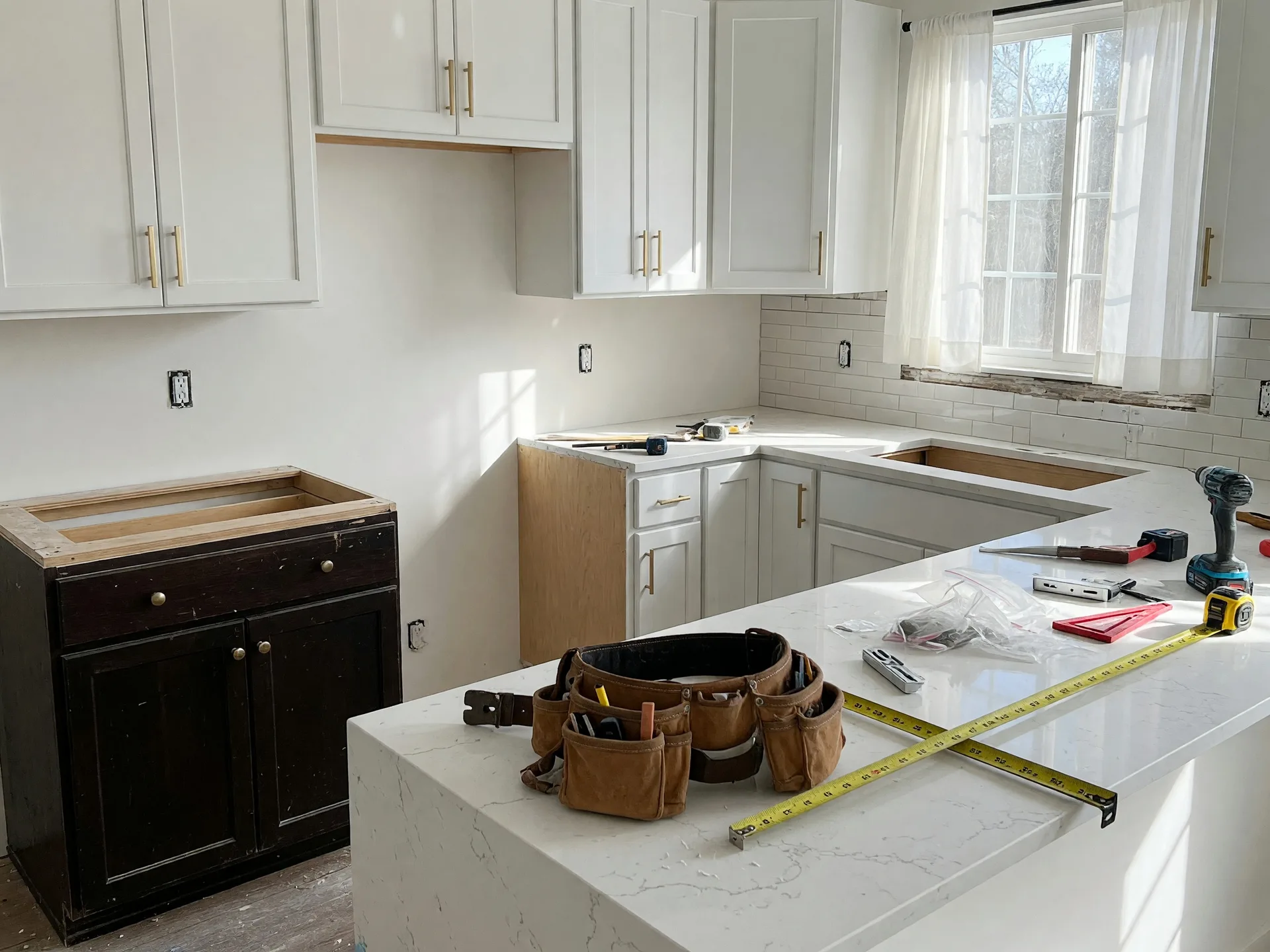
Every seller eventually asks me some version of this: "Should I fix it up before I list, or just sell it the way it is?" The answer isn't the same for everyone — and anyone who gives you a blanket "yes, always renovate" or "no, sell as-is" is guessing. The right call depends on your home, your market, your timeline, and your budget. Here's the decision framework I use with every seller.
The Four Questions That Determine Your Answer
Before you spend a single dollar, walk through these four questions honestly. The answers will tell you exactly where you land.
1. How's the Market in Your Area Right Now?
In September 2026, the Atlanta metro has 4.66 months of supply — a market trending toward balance, not a clear seller's market. But the numbers vary dramatically by city and price range. Decatur has 2.1 months of supply and homes sell in 11 days. Douglasville has 5.1 months and homes sit for 44 days. Sandy Springs is balanced at 3.7 months. Cumming is firmly a buyer's market at 5.2 months.
Here's what that means for your renovation decision:
- Seller's market (under 3 months supply): You can often sell as-is and still get strong offers. Demand outpaces inventory, so buyers compete. Renovations have lower urgency here.
- Balanced market (3–5 months supply): Condition starts to matter more. Buyers have options. A clean, move-in-ready home stands out. Strategic upgrades can help you sell faster and closer to asking price.
- Buyer's market (5+ months supply): Buyers have leverage. They'll compare your home to 15 others and pick the best value. If your home looks dated or needs work, they'll either lowball or move on. Here, targeted improvements can make the difference between selling and sitting.
The key: look at your specific area, not the metro average. A neighborhood with tight inventory and strong demand plays by different rules than a suburb with rising days on market.
2. What's Your Timeline?
Renovations take time. A kitchen refresh takes 2–4 weeks. Flooring takes 1–2 weeks. Even a full paint job takes a week of prep and execution. If you need to sell within 30–45 days, your renovation window is narrow. Here's the trade-off:
- Under 30 days: Focus on cosmetic-only work — deep clean, declutter, paint, curb appeal. Skip anything requiring contractors or permits.
- 30–90 days: You can handle a kitchen refresh, bathroom updates, and flooring refinishing. This is the sweet spot for targeted improvements.
- 90+ days: You have room for more meaningful work. But be honest — will the improvement actually change your sale price, or will you over-improve for the neighborhood?
3. What's Your Budget?
This is where sellers get emotional. "I'll just put $20K into it and get that money back at closing." Sometimes that works. Often it doesn't. The question isn't "Can I afford to renovate?" — it's "Will the renovation actually change what buyers will pay?"
A general rule: spend no more than 5–10% of your home's expected sale price on pre-listing improvements. On a $500K home, that's $25K–$50K maximum. On a $400K home, it's $20K–$40K. And that ceiling only makes sense if every dollar goes toward a specific return.
If your renovation budget would eat into your equity or force you to carry two mortgages while work is underway, the math probably doesn't work.
4. What Do Comparable Homes Look Like?
This is the most important question and the one most sellers skip. Open Zillow or Redfin and look at 3–5 recently sold homes in your area that are similar in size, age, and style. Ask yourself:
- Do they have updated kitchens?
- What kind of flooring is standard in the neighborhood?
- Are the bathrooms modern or original?
- How's the curb appeal?
- What did they sell for, and how long were they on market?
If the homes selling around you all have updated kitchens and yours has original cabinets from 2003, that's a problem you need to address. But if the comparable homes are in similar condition to yours, spending $30K on a kitchen remodel won't push your price above the market — it'll just eat your profit.
The Break-Even Point: What Renovations Actually Pay Back in Atlanta?
Not all improvements are equal. Here's what the data shows for the Atlanta market in the $400K–$1M price range — the range where most of my sellers operate.
Interior Paint — $1,500 to $4,000
The single best dollar-for-dollar improvement. Neutral tones — warm whites, greige, soft gray — make rooms feel larger, brighter, and move-in ready. In Atlanta's market, buyers expect clean, neutral walls. This pays for itself and then some. The break-even point: you recover your cost on day one because this is the baseline expectation, not a premium feature.
Kitchen Refresh — $2,000 to $8,000
Cabinet painting or refacing, new hardware, updated countertops (quartz or butcher block), and mid-range stainless appliances. The key word is "refresh" — not "remodel." A full kitchen remodel costing $30K–$60K returns only 50–60% at resale. The break-even on a $5,000 refresh happens when the updated kitchen helps your home sell for $3,500–$4,000 more than it would have as-is. In Atlanta's price range, that's realistic — the kitchen is the first room buyers photograph and the first one they judge.
Flooring Refinishing — $2,000 to $6,000
Refinishing existing hardwood — not replacing it — is one of the strongest investments. In Atlanta's older neighborhoods like Virginia-Highland, Decatur, and East Atlanta, original hardwood is expected. If it's hidden under carpet, uncovering and refinishing it is a powerful move. The break-even: homes with refinished hardwood sell for 2–5% more than comparable homes with worn or carpeted floors. On a $500K home, that's $10K–$25K.
Curb Appeal — $500 to $3,000
Fresh mulch, trimmed bushes, power-washed walkways, a clean front door, updated house numbers. The 2024 Cost vs. Value Report shows a garage door replacement returns 194% and a steel entry door returns 188%. Even without big-ticket items, a tidy exterior signals a well-maintained interior. Buyers form their first impression in the first 7 seconds. The break-even: even a $500 curb appeal package makes your listing photos pop, which drives more online clicks and showings.
Bathroom Updates — $500 to $5,000
A new faucet, fresh grout or reglazing, updated light fixture, and a clean mirror can transform a bathroom for under $1,000. A full midrange remodel averages $25,000 and returns 67–74%. The break-even on the budget version: you spend $500–$1,000 and eliminate the "this bathroom needs work" objection that costs you $3,000–$5,000 in negotiations.
Professional Deep Clean — $300 to $800
Baseboards, windows, vents, behind appliances, light switches, grout lines. This doesn't add value — it prevents value loss. A spotless home signals that the home has been maintained. A dirty home tells buyers the opposite, even if everything is mechanically sound. This is the cheapest investment on this list and the one I'd never skip.
What to Skip: Renovations That Don't Break Even
These improvements are common seller mistakes. They cost real money and return very little at resale in the Atlanta market.
Full Kitchen Remodel — $30,000 to $60,000
Returns only 50–60%. Buyers in Atlanta's $400K–$1M range expect an updated kitchen, but they don't need custom cabinetry and premium appliances. A $5,000 kitchen refresh often creates the same buyer response as a $50,000 remodel. The break-even never arrives — you lose $15K–$25K on the project.
Swimming Pool Addition — $50,000 to $100,000+
Builds a maintenance burden that many Atlanta buyers actively avoid. Pools narrow your buyer pool and rarely recoup their cost. If you already have one, keep it clean. If you don't, don't add one for resale.
Luxury Upgrades in Mid-Range Homes
High-end countertops, imported tile, or designer fixtures in a $400K home won't recoup their cost. Buyers in that price range expect quality, not luxury. Spending $15K on custom backsplash tile when a $2K option looks equally clean is not a smart investment.
Structural Changes — $20,000 to $100,000+
Removing walls, adding rooms, or reconfiguring layouts. Expensive, requires permits, takes weeks, and the ROI is unpredictable. These projects make sense for your own enjoyment — not for a 6-month exit window.
Over-Personalized Improvements
Bold paint colors, custom built-ins, themed rooms, or specialty installations. These make it harder for buyers to imagine their own life in the space. The goal is broad appeal, not personal expression.
When Selling As-Is Makes More Sense
Selling as-is isn't giving up — it's a strategy. It makes financial sense when:
- The math doesn't work: The cost of necessary repairs would exceed what you'd recoup. If the roof is 20 years old and needs replacing at $12K–$18K, and your home would sell for the same amount either way because the neighborhood supports it, don't replace the roof — price accordingly.
- You're facing timeline pressure: Job relocation, probate, divorce, financial stress. When time is the constraint, renovations create delay and uncertainty. Pricing your home correctly for its current condition and letting buyers decide is faster and more predictable.
- Investor interest is active: In areas like Douglasville ($270K median), Fairburn ($373K), and Lawrenceville ($380K), cash buyers and investors are actively absorbing inventory. These buyers want value-add properties and don't expect move-in-ready condition.
- You're in a hot neighborhood with tight inventory: If your area has under 2 months of supply and homes are selling in under 14 days — like Decatur (2.1 months, 11 days) — demand will overcome condition issues in most cases. The exception: if your home has a major system failure (structural, roof, HVAC) that triggers inspection concerns.
- The home needs major system work: Foundation issues, outdated electrical, failing HVAC, or mold. These aren't cosmetic fixes — they're expensive, require licensed contractors, and buyers will discover them in inspection anyway. Better to price transparently than to patch a $15K problem for $5K and lose buyer trust.
Selling as-is doesn't mean selling for nothing. It means pricing strategically to attract buyers who understand the condition and are willing to act. In the current Atlanta market, selling as-is is a legitimate strategy — and a cash offer can eliminate the need for repairs entirely.
When Strategic Upgrades Pay Off
On the flip side, here's when spending money before listing actually moves the needle:
Dated Kitchens That Scare Buyers Away
If your kitchen has original cabinets, laminate countertops, or appliances from the early 2000s — and the comparable homes in your area have updated kitchens — buyers will mentally subtract $15K–$25K from their offer before they even leave the showing. A $5K–$8K refresh (cabinet painting, new hardware, updated countertops, clean appliances) eliminates that mental discount and lets buyers focus on the home's strengths instead. ROI: 70–80%.
Poor First Impressions That Kill Showings
Peeling paint, overgrown landscaping, a stained front door, missing house numbers. These signal neglect — and buyers who see neglect outside assume it inside, regardless of reality. A weekend of curb appeal work ($500–$2,000) can change the entire trajectory of your listing. The ROI isn't just financial — it's the difference between 8 showings in the first week and 2.
Needed Repairs Buyers Will Flag in Inspection
Leaking faucets, cracked tiles, broken light fixtures, damaged drywall, peeling paint on older homes (potential lead concern). Buyers expect these to be in working order. When they're not, buyers mentally deduct two to three times what the fix would cost. Spending $200–$1,000 on small repairs prevents $1,000–$5,000 in negotiation deductions during inspection.
Flooring That Dates the Entire Home
Worn carpet, mismatched flooring from different eras, or vinyl that was outdated 10 years ago. In Atlanta's $400K–$1M range, buyers expect clean, consistent flooring. Refinishing existing hardwood ($2K–$6K) returns 70–80%. Replacing worn carpet with LVP ($3K–$8K) returns 50–60%. Both options are cheaper than the negotiation hit you'll take with buyers who see flooring as a major project.
The Atlanta-Specific Renovation Cost Guide
Here's a quick-reference table for the most common improvements and what they cost in the Atlanta metro area in 2026. These are contractor averages, not DIY estimates — and they reflect the $400K–$1M price range I work in most.
| Improvement | Cost Range | ROI | Timeline |
|---|---|---|---|
| Interior Paint (whole home) | $1,500 – $4,000 | 107% | 5–7 days |
| Cabinet Refacing/Painting | $2,000 – $6,000 | 70–80% | 1–2 weeks |
| Countertop Replacement | $2,500 – $6,000 | 60–75% | 3–5 days |
| Hardwood Refinishing | $2,000 – $6,000 | 70–80% | 5–7 days |
| LVP Flooring Install | $3,000 – $8,000 | 50–60% | 3–5 days |
| Bathroom Refresh (cosmetic) | $500 – $3,000 | 67–74% | 1–3 days |
| Full Bathroom Remodel | $15,000 – $30,000 | 67–74% | 3–5 weeks |
| Garage Door Replacement | $4,000 – $5,500 | 194% | 1 day |
| Steel Entry Door | $2,000 – $4,000 | 188% | 1 day |
| Landscaping Refresh | $500 – $3,000 | 100–150% | 1–2 days |
| Professional Deep Clean | $300 – $800 | Essential | 1 day |
| Lighting Updates | $300 – $1,500 | High per $ | 1–2 days |
The Decision Framework: A Quick Summary
Here's the short version — the framework I walk through with every seller who asks me this question:
- Always fix what's broken. Leaking faucets, cracked tiles, broken fixtures, damaged drywall. These are expectations, not upgrades. Budget: $200–$1,000.
- Always clean and paint. Professional deep clean + neutral interior paint. This is the highest-ROI combination you can do. Budget: $1,800–$4,800.
- Always address curb appeal. First impressions happen before buyers walk through the door. Budget: $500–$3,000.
- Check comparable homes before spending on kitchen or bath. If the homes selling around you have updated kitchens, refresh yours. If they don't, save the money. Budget: $2,000–$8,000 if needed.
- Price around what you didn't fix. If you chose not to update the flooring or bathroom, price the home to reflect that. Buyers will do the work themselves — they just want the price to make sense.
The total budget for a smart, high-ROI pre-listing investment: $4,500–$16,800 for most Atlanta homes. That's a fraction of what a full renovation costs — and it addresses the items that actually affect buyer perception and sale price.
Related guide: Complete Atlanta Selling Guide — explore pricing, prep, and closing strategies.
Frequently Asked Questions
Should I renovate before selling my Atlanta home?
Only when the work will change the price buyers pay. Painting, flooring, lighting, and a clean, decluttered home almost always help. Full kitchen and bath remodels only pay off when the neighborhood's sold comps justify them. Over-improving for the area returns less than you spend.
Which renovation projects have the best return before selling?
The best returns come from the quick wins buyers see first: fresh interior paint, updated flooring, brightened kitchens and baths, and curb appeal. Major additions and luxury finishes rarely return their full cost. Match your improvements to what comparable homes in your price band actually sold with.
What is the risk of renovating too much?
You can spend money the market will not pay back. The classic mistake is putting a $60,000 kitchen into a neighborhood where comparable homes top out below your total investment. The comps define your ceiling, so study them before you write a check for improvements.
What renovations should I skip before selling?
Skip anything personal, niche, or invisible: pools in markets that do not reward them, finished basements with odd layouts, luxury home offices, and high-end systems buyers never see. Repairs that matter, like a bad roof or HVAC, should be fixed, but decorative over-investment belongs in the skip column.
Talk to Tommy before you spend a dime
I've been through this process more than 500 times. I'll walk through your home, tell you exactly what's worth fixing, what to leave alone, and what the market expects at your price point. I'll save you from spending money on the wrong things — and help you invest in the ones that actually move the needle.
Free walkthrough, no obligation. I'll be in touch.
Contact Tommy