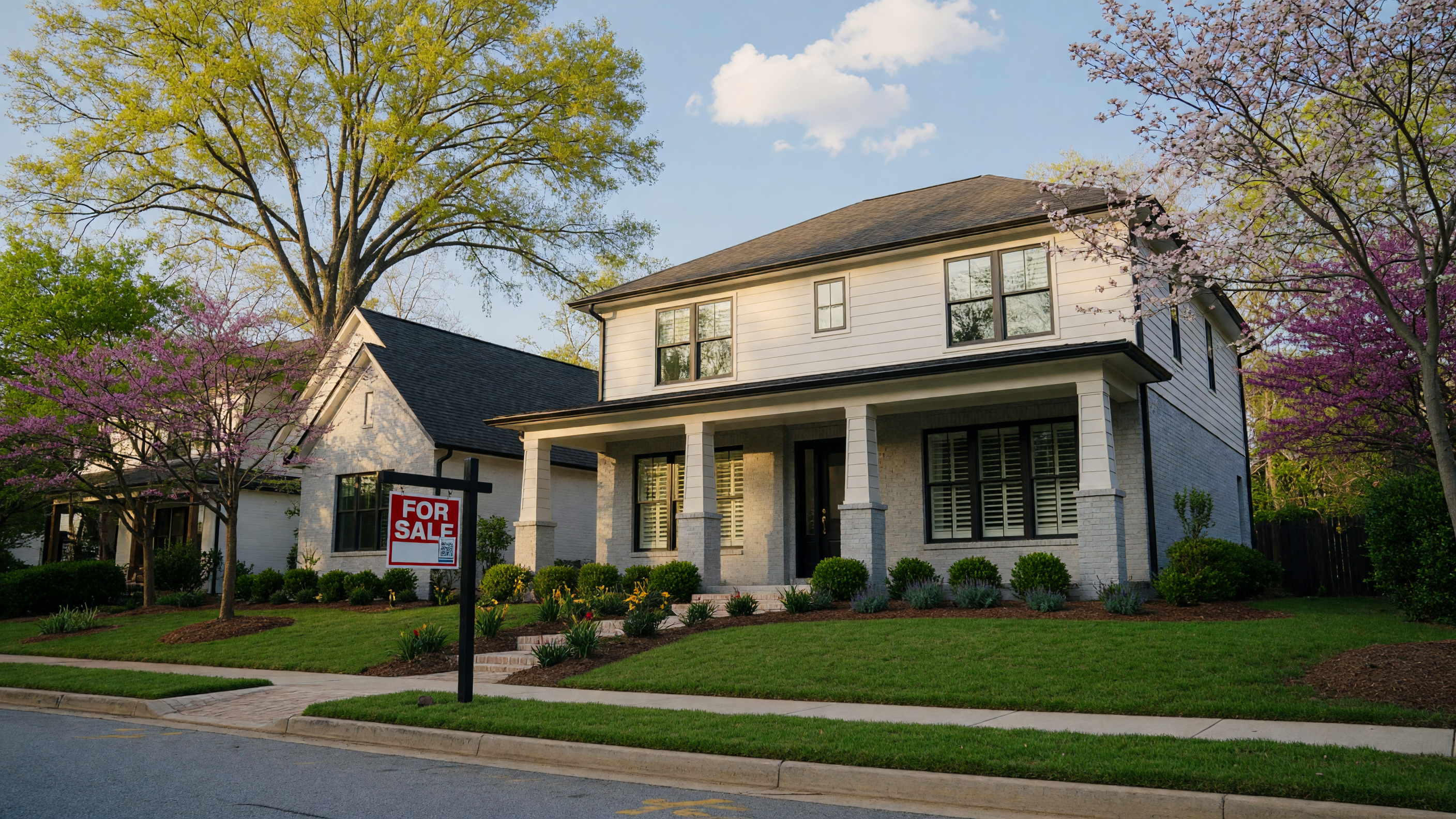
Worried your home will sit?
Here's what you need to know.
The fear of a home sitting on the market is real, and it's valid. But here's the honest truth: homes don't sit because the market is broken. They sit because of pricing, presentation, or strategy. Let's break down, with the most recent numbers, what's actually happening in Atlanta right now.
Atlanta's market in
October 2026, by the numbers.
Here's where the market actually stands as of October 2026, using the most recent data available. Across the Atlanta-Sandy Springs-Roswell metro, Realtor.com data (via the St. Louis Fed) counted 29,735 active listings in September, and the most recent monthly reading put the median home at 50 days on market. The City of Atlanta runs a little slower, about 57 days from listing to contract (Redfin, three months ending August 2026). Inventory has climbed all year: the Atlanta REALTORS Association's 11-county brief rose from 3.7 months of supply in January to 4.6 months in June, and FMLS measured a 4.4-month supply of detached homes in July. Statewide, the Georgia Association of REALTORS reported a median sales price of $370,000 in July, up 2.4% from a year earlier, with days on market up nearly 10%. In the city, the average home sells for about 97.6% of its list price, and nearly seven in ten metro homes sold below their original asking price in 2025, the highest share in a decade. Buyers are taking longer to decide and negotiating more than they did a few years ago. This isn't a crash; it's a market settling into balance after years of frenzy. If you understand these numbers, you will understand why some homes sell in weeks and others sit for months.
What 4.6 months of supply really means
In real estate, roughly 6 months of supply is considered a balanced market. Below that, sellers hold a slight edge. Above it, buyers do. At about 4.6 months across the 11-county metro, up from 3.7 months in January, Atlanta still sits just on the sellers' side of the line, though the gap is narrowing. Put another way, about one in five homes currently for sale changes hands each month, an absorption rate of roughly 20% to 22%. Homes can and do still sell quickly in this market, but buyers have real choices. That is not a warning sign. It is a market where pricing and presentation determine whether your home moves or sits.
Why some homes sit
and others don't.
With roughly 4.6 months of supply across the core Atlanta metro and median days on market near 50, the margin for error is thinner than it was a few years ago. Buyers have more choices, and they're using them: more time on market, more showings, more negotiation. But here is the encouraging part: sellers who price from day one at what the market will pay, and present the home like the best option in its range, are still seeing offers within weeks. Most homes that sit suffer from a combination of factors that compound over time. The good news? Nearly all of them are fixable with the right strategy.
Overpricing from day one
The single most common reason homes sit. With months of supply up from 3.7 in January to about 4.6 by June, and more than 29,000 active listings across the metro in September, buyers have choices and leverage. They're comparing your home to several others in the same price range. If yours is priced above market with no flexibility, they move on.
Weak first impressions
Dark photos, cluttered rooms, or a listing that looks like it was shot in five minutes. Over 90% of buyers start their search online. If your photos don't make them want to visit in person, you've already lost them.
No staging or prep
Buyers struggle to see past clutter, dated finishes, or empty rooms. Even small investments — fresh paint, cleared countertops, updated light fixtures — can shift how a buyer perceives the entire home.
Passive marketing
A listing on the MLS isn't a marketing plan. Homes that sell quickly get promoted: professional photography, targeted online ads, agent-network outreach, and social media. If your agent just "listed it and waited," the marketing didn't match the market.
Ignoring feedback
Every showing generates data. If buyers consistently mention the same concern — price, layout, condition — and nothing changes, the listing goes stale. An active listing strategy means reading the feedback and adjusting.
Wrong market timing
Sometimes the issue isn't the home — it's the season, the interest rates, or the competitive landscape. Understanding when to list and when to wait is part of a real strategy, not guesswork.
What happens after
14, 30, and 60 days.
Understanding the timeline helps you act early, instead of reacting after it's too late. Here's what typically happens as days on market accumulate.
The critical window
Your listing gets the most traffic in the first two weeks — fresh-listing boost on Zillow, Realtor.com, and the MLS. Buyers and their agents sort by newest. If your home is priced correctly and presented well, this is when showings and early offers happen. If you get zero showings in the first 14 days, the market is telling you something: the price, the photos, or the presentation need to change.
Stale signals start
After two weeks, most buyers who were actively searching have already seen your listing. The MLS "new" badge is gone. If you're still getting showings but no offers, the price may be slightly off. If showings have dried up completely, the market has spoken — buyers are comparing your home to others and choosing differently. This is the moment to adjust, not wait.
Serious negotiating position erodes
An active listing past 30 days raises eyebrows. Buyers and their agents start wondering: what's wrong with this one? You may attract lowball offers or investors looking for a deal. The listing is no longer "fresh" in anyone's mind. The longer it sits, the more leverage you lose — and the more likely a price reduction becomes necessary.
Expired listing territory
Most listing contracts in Georgia run 90–180 days. If your home hasn't sold by day 60, the conversation shifts to relisting, repricing, or pulling the listing entirely. An expired listing creates a perception problem: buyers assume something is wrong, even if the issue was just pricing or marketing. That's exactly when an experienced strategist matters most.
The price isn't just
a number — it's a strategy.
Pricing is the single biggest factor in whether your home sells quickly or sits. It's also the area where emotions cause the most damage.
Here's the reality: in a market with months of supply around 4.6 and median days on market near 50, buyers are informed. They have seen what else is available. They know what comparable homes sold for. If your asking price does not align with the data, they will scroll past.
The first 14 days are when your listing gets the most attention. An overpriced listing burns through that window with no offers to show for it. By the time you reduce, the damage is done — buyers see a price reduction and wonder what's wrong.
"I price homes based on what they'll sell for, not what the seller hopes they'll sell for. It's a harder conversation, but it's the one that gets to the closing table."
Tommy Williams
Pricing based on what you need
The market doesn't care what you need — it cares what buyers will pay. Pricing based on your mortgage balance or desired profit often leads to an expired listing.
"Leaving room to negotiate down"
This strategy assumes buyers will lowball you. In practice, overpriced homes just sit — and the longer they sit, the less leverage you have.
Matching your neighbor's asking price
Your neighbor's list price isn't their sale price. And their home isn't yours. Comparable sales, not asking prices, should drive your pricing strategy.
Waiting to see what happens
The first 7–14 days are your window. An overpriced listing burns through that window with no offers to show for it.
Photos and staging
aren't optional anymore.
Over 90% of buyers start their home search online. Your photos are your first showing — and most buyers decide whether to visit in person based on those images alone. If your listing has dark photos, cluttered rooms, or looks like it was shot in five minutes, you're losing buyers before they ever walk through the door.
Professional photography isn't a luxury — it's the baseline. Homes with professional photos sell faster and often for more. That's not opinion; it's what the data consistently shows.
Staging doesn't have to mean hiring a professional stager for every room. Sometimes it means clearing countertops, putting away personal items, updating a light fixture, or adding fresh plants. I'll tell you exactly what's worth doing for your specific home and price range — and what's not.
Data-driven pricing
No guessing. I run comparable sales analysis on recent closed transactions in your specific neighborhood and price range: not just what's listed, but what actually sold and at what terms. With months of supply around 4.6 and the metro median hitting 50 days on market, the right price from day one is everything.
Professional photography
Professional photography, not iPhone snapshots. Homes with professional photos sell faster and for more. I make sure your listing looks as good online as it does in person — because that's where buyers form their first impression.
Strategic staging guidance
I'll tell you exactly what's worth doing before listing — and what's not. Sometimes that means decluttering and a deep clean. Other times it means updating key rooms. Either way, the advice is based on what buyers in your price range expect, not a magazine trend.
Active, not passive
I don't just list your home and wait. I track showings, monitor online traffic, collect buyer feedback, and adjust strategy within the first 14 days if needed. Every week has a plan — not just hope.
How an expired listing
changes everything.
When a listing expires, buyers notice. Even if the issue was just overpricing or weak marketing, the perception becomes: something is wrong with this home. That stigma is real, but it is also recoverable with the right approach. Many sellers pull their homes off the market rather than let them expire, getting ahead of the problem but not always with a plan to come back stronger.
Perceived stigma
Buyers and their agents see an expired listing and immediately wonder: why didn't it sell? Even well-maintained homes can carry this perception.
Reduced leverage
After an expired listing, buyers have more negotiating power. They know the home didn't sell, and they'll use that as leverage in any offer.
Fresh start advantage
The good news: a new listing with fresh photos, updated pricing, and a clear strategy can overcome the stigma. Many of my best results come from relaunched listings.
The 90-Day Recovery Plan
I specialize in relaunching homes that didn't sell the first time. That means fresh pricing, new marketing, updated strategy — and a plan built around what this market wants right now. Over 20 years of experience means I've seen every scenario and have a playbook for each one.
Discuss Your Situation
Why an experienced
strategist makes the difference.
Anyone can put a home on the MLS. That takes about 30 minutes. What takes experience, and over 20 years of it, is knowing how to price a home correctly in the first place, reading market signals in the first two weeks, and adjusting before the listing goes stale. In a market where the metro median runs near 50 days, days on market is up nearly 10% from a year ago statewide, and a rising share of listings sit past 60 days, the difference between a well-strategized listing and a "list it and hope" approach is measured in tens of thousands of dollars.
In my career, I've helped over 500 families sell their homes. I've seen markets shift, rates spike, and buyer behavior change. What hasn't changed is this: homes that sell well are the ones that are priced right, presented well, and actively managed from listing through closing.
When you work with me, you're not getting an agent who lists your home and disappears. You're getting someone who tracks every showing, monitors online traffic, reads buyer feedback, and keeps you informed — every step of the way. That steady follow-through is what carries transactions through any hiccup to a satisfactory outcome.
Learn more about Tommy
What sellers ask
before calling.
How much is my house really worth?
I provide a detailed comparative market analysis using recent closed sales in your neighborhood: not an automated estimate. With roughly 4.6 months of supply across the core metro and a median listing price around $425K, accurate pricing is the difference between selling and sitting.
What happens if my home doesn't sell?
An expired listing isn't a failure — it's data. I'll analyze what happened, reposition your home with a fresh strategy, and relaunch with updated pricing, new marketing, and a plan built for what this market wants right now.
Should I lower my price right away?
Not always. Sometimes the issue isn't the price — it's the photos, the staging, or the marketing. I look at the full picture before recommending any change. But if the data says the price needs adjusting, I'll tell you that too.
How long does it take to sell a house in Atlanta?
Across the Atlanta-Sandy Springs-Roswell metro, the median home sells in about 50 days (Realtor.com data, May 2026), while the City of Atlanta runs closer to 57 days (Redfin, three months ending August 2026). Well-priced, well-presented homes in desirable areas can still sell in under 14 days. Homes priced above market can sit for months.
Is it too late if my listing already expired?
No. In fact, I specialize in relaunching expired listings. We'll review what went wrong, reposition your home with a new strategy, and relaunch with a plan designed for this market. Many of my best results come from homes that didn't sell the first time.
Can I sell without doing repairs or staging?
You can, but presentation matters. Sometimes a small investment — fresh paint, decluttering, basic landscaping — can significantly impact your sale price and timeline. I'll give you an honest assessment of what's worth doing.
Go deeper on
selling strategy.
Let's find out where
you actually stand.
No pressure. No obligation. Just an honest conversation about your home's market position, what it's worth, and what the smartest next move is for you.
Whether you're worried about your home sitting, your listing already expired, or you're just trying to figure out if now is the right time — I'll give you the data and let you decide.
Thank you for reaching out. I'll review your message and get back to you shortly.
I'll be in touch
Back to HomePlease try again or call me directly. I'm ready when you are.