What a Data Center Could Mean for Your Home Value

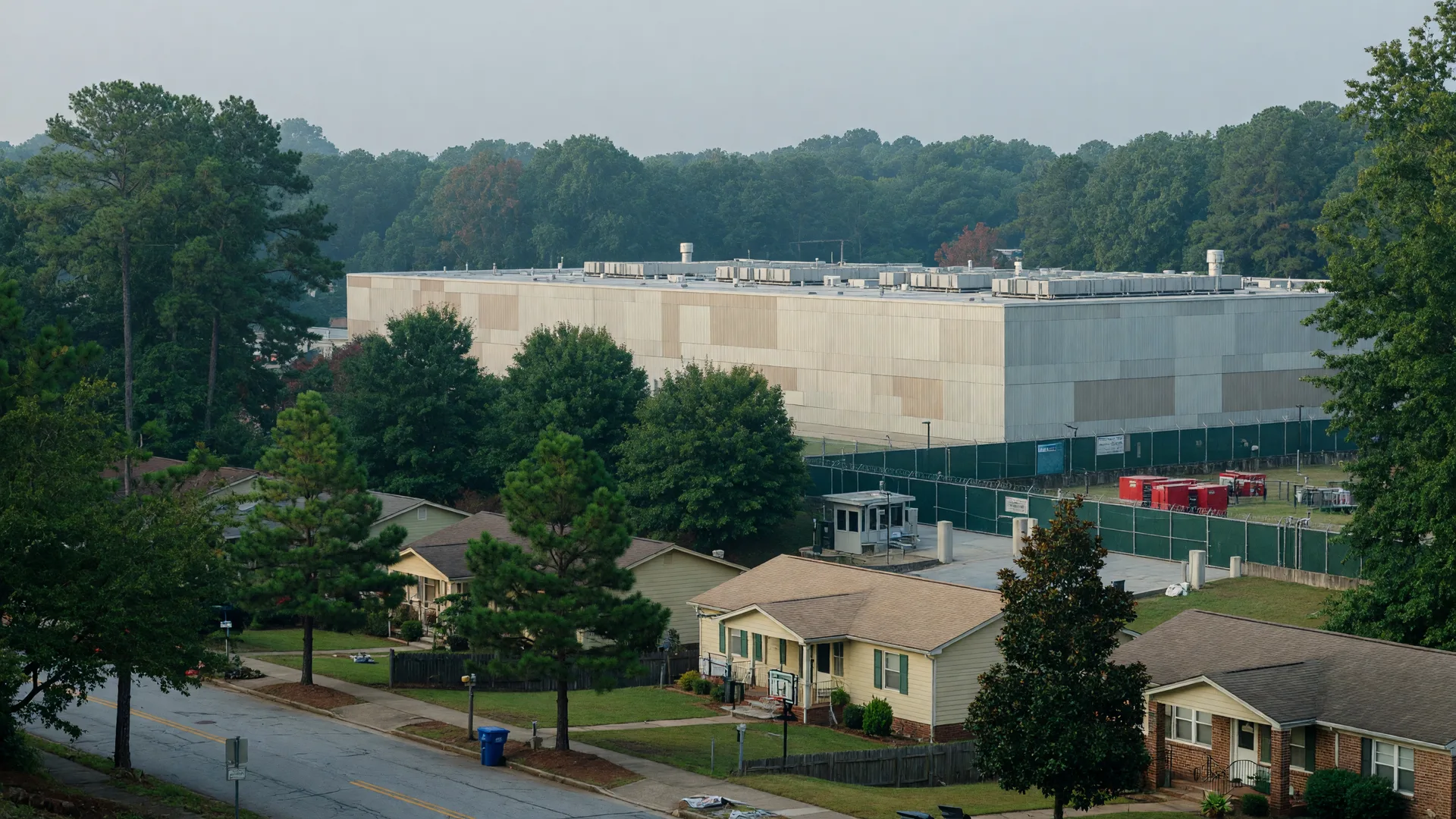
Have you heard about the proposed data center? Here's what it could mean for home values and traffic patterns.
If a data center has been proposed near your neighborhood, or even rumored, you are not alone in wondering what it means for your home. This guide keeps the focus on your street and your home value, in plain language. I'm Tommy Williams, and after over 500 homes sold across Metro Atlanta, my job here is to help you separate facts from fear and figure out what to do next.
Americans Are Saying No to Data Centers Near Them
In 2025, Gallup asked Americans whether they would support building an AI data center in their local area. The answer was decisive: 71% oppose it, and 48% strongly oppose it.
To put that in context, Gallup asked the same question about a local nuclear power plant. Only 53% opposed that. Gallup has tracked nuclear opposition since 2001, and the all-time high for nuclear opposition was 63%. Data centers are already more opposed than nuclear power has ever been.
Why do people object? The top reasons, per the same survey, are water use, power demand, utility bills, and quality of life. In the open-ended answers, 9% of opponents pointed to community impact, housing, and property values. So your concern about your home value is shared, and it is not unreasonable.
The opposition is strongest in the Midwest and the South, at 76% and 75%. The West is the most accepting, and even there 63% oppose. Metro Atlanta sits squarely in the most skeptical region. That matters, because how a community feels about a facility shapes how a proposal plays out at the local level.
What a Data Center (or Even a Rumor) Actually Does to a Neighborhood
The honest answer is: it depends on distance, scale, and how long a proposal stays unresolved. Here is what is realistic to expect, without the scare stories.
- Construction traffic and noise for 18 to 36 months. The noisiest and most disruptive phase is construction. Expect heavy trucks, equipment, and traffic on local roads for 18 to 36 months while a facility is built.
- Long-term water and power demand. Once running, a large data center uses a lot of water and electricity, around the clock. That demand can show up in utility planning and, in some cases, in how rates are set.
- Potential utility or tax implications. Data centers often bring large tax revenue to a county, which can fund services. But they can also put pressure on water and power infrastructure, and communities sometimes negotiate special agreements. Whether the net effect on your wallet is positive or negative depends on the specifics.
- What happens to home values nearby. Here is the balanced picture. Data centers often lift home values across a broader area, because they bring jobs and infrastructure investment. But homes very close to a large facility can see a discount, sometimes within about a mile. And while a proposal is still unresolved, the uncertainty itself can freeze buyers, because nobody wants to commit while the outcome is unknown. That pause can soften demand and slow your sale timing until the picture clears.
The Questions Every Worried Homeowner Should Ask
Before you make any decision, get the facts. Start with these four questions:
- How far is my home from the proposed site? Distance is the single biggest factor in how a data center could affect your property.
- What is the county zoning process, and can I speak at it? Zoning hearings are public. Knowing the calendar gives you a chance to be heard.
- What are the actual plans for water, power, and traffic? Ask for the real numbers, not the summary. The plans dictate the real impact.
- Is this confirmed, or still a rumor? A rumor can move through a neighborhood faster than a fact. Find out what is actually on the table before you react.
Here is how I think about it. When a proposal, or even a rumor, lands in a neighborhood, the best move is to get the facts before it decides your plans for you. Fear makes poor timing. Information makes good timing.
What I Can Do
I'm available. If a data center has been proposed near a home you own, or a home you are thinking about, I can run the numbers on that specific address. I'll lay out what the center, or the rumor of one, means for that home's value, its traffic, and its sale timing, and what happens if you wait or act now. No hype, no pressure, just a clear read of your situation.
I'll be in touch.
Want the full Metro Atlanta picture?
This guide keeps the focus on your street and your home. For the metro-wide, county-by-county breakdown of how data centers are affecting Atlanta home values, read the companion analysis: Data Centers and Metro Atlanta Home Values.
Questions I'm asked about data centers and home values.
Will a data center hurt my home value?
Not necessarily, and not everywhere. Data centers often lift values across a broader area through jobs and investment, but homes very close to a large facility can see a discount. The uncertainty of an unresolved proposal can also pause buyers. The honest answer depends on distance and scale.
How far is too close?
There is no single line, but homes within about a mile of a large facility are the ones most likely to feel a discount. Beyond that, the broader area often benefits from the economic activity. Every proposal is different, which is why I run the numbers address by address.
What if it’s only a rumor?
A rumor can still move the market, because buyers react to what they hear. That is why getting the facts first matters. If you know what is actually confirmed, you can decide based on reality rather than hearsay.
How do I find out the facts?
Start with your county’s planning and zoning office. Ask about the status of the proposal, the zoning process, and the schedule for public hearings. Then bring me the specifics and I’ll help you read what they mean for your home.
Want to know what a data center means for a specific home value in your neighborhood? Ask me here.
I'll run the numbers on your address and tell you plainly what a proposal, or a rumor, means for your value, your traffic, and your timing.
Straight answers to the questions neighbors ask.
A Douglasville neighbor raised sharp questions when this post was shared on Nextdoor, and those questions deserve straight answers. So let me be clear up front: this article was never anti data center. It is about what a new campus can mean for home values, and about what questions neighbors should ask the county before incentives are signed. Here is the give and take.
Fair points, conceded plainly
Once it is built, is a data center actually a quiet neighbor?
Yes, and that is worth conceding plainly. Construction is the noisy phase: heavy trucks, equipment, and added traffic on local roads for the months it takes to build. Once a facility is operating, it runs around the clock but is quiet from the street. The legitimate concerns about noise and traffic are real, and they are concentrated in the build phase rather than the life of the facility.
Does a data center even employ many people?
Fair again. Day-to-day staffing at a single facility is minimal, often under 20 people, so ongoing traffic is low. It is not a site full of workers coming and going on shift. That part of the argument is accurate, and it is one reason the permanent footprint can be lighter than people expect. The heavy lift, and the heavy traffic, happen during construction.
Didn't Douglasville already handle data centers on Riverside Parkway?
That is fair history. Douglasville built data centers along Riverside Parkway in the early 2000s, and the community adapted. I will not argue with that record, and it is worth saying plainly. The honest difference is scale: today's proposed hyperscale campuses are far larger than those earlier facilities, and scale changes what a project asks of the power grid, the water system, and local roads. The Riverside Parkway experience is a fair comparison. It just is not a same-size one.
Corrections, made respectfully
Don't data centers generate their own power?
No, and this is the fact worth getting exactly right. Data centers do not run on their own grid. They carry backup generators for outages, but day to day they draw power from the same grid homes and businesses use. That shared draw is why this deserves a conversation. Georgia's Public Service Commission recently approved nearly 10,000 megawatts of additional power, with roughly 80 percent expected to serve large customers, including data centers. That is real pressure on the grid, and it is fair for neighbors to ask how it will be managed before a deal is signed, not after.
Doesn't closed-loop cooling mean data centers barely use water?
Partly, and this one deserves precision. Closed-loop systems do recycle water, but the cooling towers still evaporate it continuously, so recycling does not mean zero consumption. A medium-sized data center can use on the order of 300,000 gallons a day, about what 1,000 households use. And the reader's point that some local governments may not charge data centers enough for water, with Fayetteville cited as the example, is fair. Water rates and water supply are exactly what neighbors should watch before a deal is signed.
My goal is helping neighbors ask good questions, not campaigning for or against any project.
If a data center is proposed near your street, or you simply want to talk through what it could mean for your home value, reach out. Use the contact page on this site, call or text me at 770-637-9774, or book a time on my calendar. I'm available. I'm ready when you are.