How a 1031 Exchange Works in Georgia: Sell an Atlanta Rental and Defer the Tax

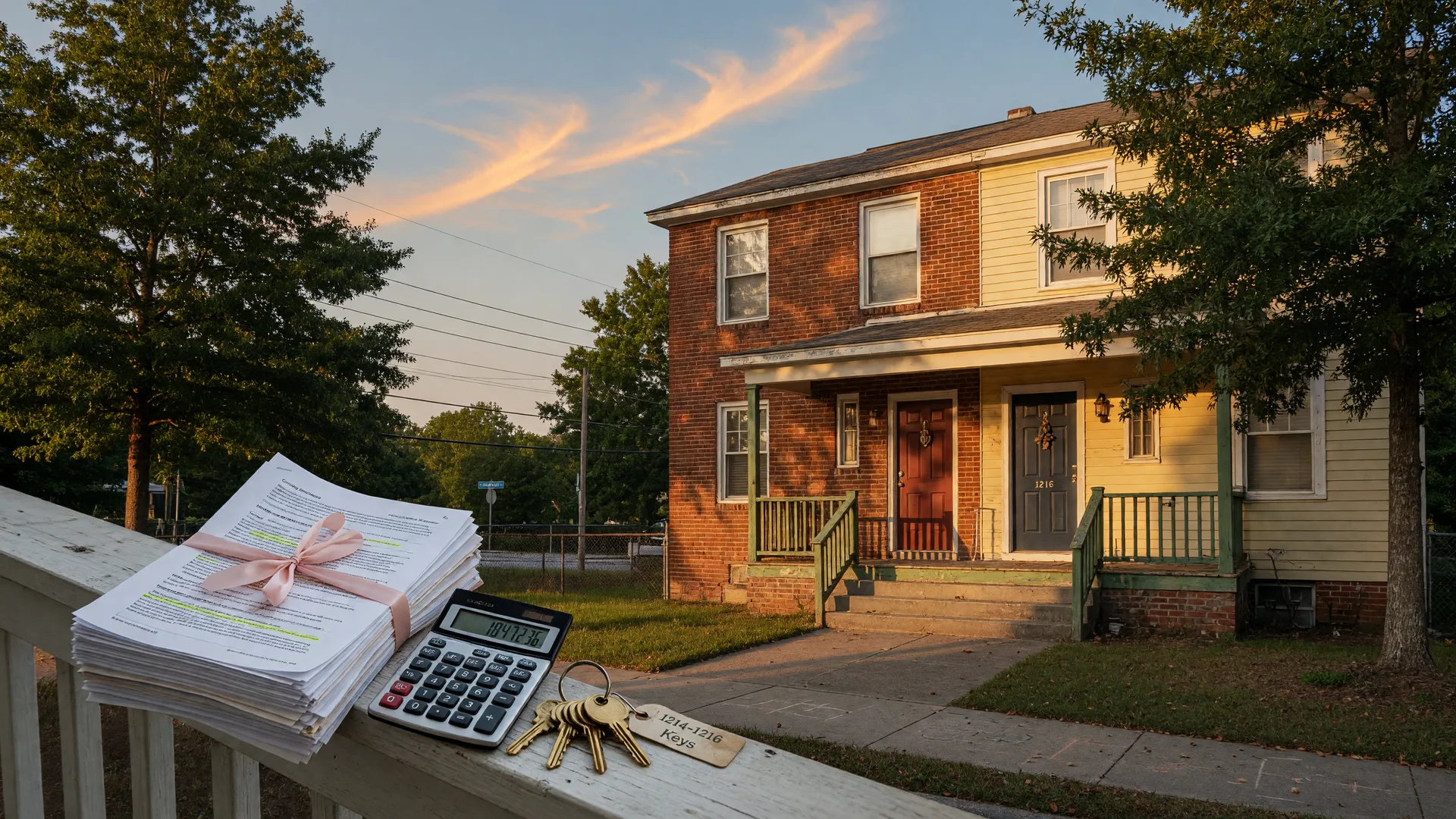
Should I do a 1031 exchange when I sell my Atlanta rental, or just pay the tax and move on? A 1031 exchange lets you sell a Metro Atlanta rental and defer the capital gains tax, the depreciation recapture, and Georgia's share of the bill by reinvesting the proceeds into another investment property through a qualified intermediary. The mechanics are strict: 45 calendar days to identify a replacement, 180 to close, no exceptions for holidays or slow lenders. Here is how the exchange works in Georgia in 2026, what it actually defers, and when selling outright is the smarter move.
What a 1031 Exchange Actually Does
Section 1031 of the tax code has one job: it lets you roll the gain on one investment property into another instead of paying tax on the way out and starting over with less capital. The property you sell must be held for investment or business use, which is exactly what a rental in Smyrna, Decatur, Douglasville, or any of the other markets I work is. The property you buy just has to be like-kind, which in real estate means pretty much any real estate. An Atlanta multifamily can swap into a Douglas County rental, a commercial building, or even raw land held for investment, and it can be anywhere in the country.
The key phrase is "defer," not "forgive." The tax bill is postponed, and if you keep exchanging through your selling years, the basis carries forward property to property. That is the engine behind most investors I know who built portfolios instead of paying tax every time they traded up.
The Tax You Are Deferring on an Atlanta Rental
An outright sale of a rental hits you in three places at once, and this is the part most sellers under-estimate. First, federal long-term capital gains, at the 0%, 15%, or 20% bracket depending on your income. Second, the 3.8% Net Investment Income Tax if your income is high enough. Third, depreciation recapture on the building, capped at 25%, because every year of depreciation you claimed lowered your basis and added to your gain. The depreciation, not the sale price, is usually the biggest tax surprise when a landlord finally sells.
Then there is Georgia. Georgia no longer has a separate lower capital gains rate: since tax year 2026, capital gains are taxed as ordinary income at the state's flat 4.99%, which HB 463 made permanent. The good news is that Georgia conforms to federal Section 1031, so a properly structured exchange defers the state tax too, and you file only federal Form 8824 with no separate Georgia form. Add it up and a straight sale can hand the government a fifth or more of your equity. That is real money, and it is the exact number to model before you decide.
The Two Deadlines That Make or Break the Exchange
Both clocks start on the day your rental closes, and neither one stops. By day 45 you must deliver a written, signed identification of the replacement property to your qualified intermediary. The standard rules let you name up to three candidate properties of any value, or any number as long as their combined value stays within 200% of the property you sold. After day 45, you are locked in. By the earlier of day 180 or the due date of your tax return, you must close on a replacement. Miss either deadline and the entire gain becomes taxable as if the exchange never happened.
There are no extensions for weekends, holidays, or a lender running slow, which is why the practical advice is to start looking the day you list. The investors who get burned are the ones who close in late fall and then discover the 180-day clock collides with April tax deadlines, or the ones who identify properties from a fireside chat instead of under contract. Identifying is the cheap, recoverable step. Closing is not.
The Rules You Cannot Skip
Proceeds must go through a qualified intermediary, a third party who holds the cash between the two closings. If the money touches your bank account, even overnight, the exchange is disqualified, full stop. The same taxpayer who sells must buy the replacement; a spouse, LLC, or trust with a different name does not work unless the structure is set up correctly ahead of time. To defer everything, the replacement must be equal to or greater in value, and you must reinvest all of the net proceeds and replace any debt relief. Cash or debt relief you keep is "boot," and tax is due on it immediately.
Georgia adds two wrinkles because closings here require a licensed attorney. If you are a non-resident seller, Georgia withholds 3% of the sales price at closing, which you can reduce to 3% of the gain with the Affidavit of Seller's Gain, Form IT-AFF2, or waive entirely for a qualifying exchange with the Certificate of Exemption, Form IT-AFF3. Your closing attorney and your tax advisor should handle these together before you sign anything, not after.
When Selling Outright Is the Smarter Move
An exchange only makes sense if you want to stay in real estate. If you are exiting the market to reinvest in a business, to retire into liquidity, or because landlord life has worn you out, the exchange locks you into buying again and the loan math may not cooperate at today's rates. If you need the cash for something specific, pay the tax and keep the rest. If you want to move into the property yourself, exchanges require investment use, so converting it to a home is its own decision, not a 1031.
There is also the estate angle investors rarely consider. A rental passed to heirs gets a stepped-up basis at death, which can wipe out the built-up gain entirely, no exchange required. When a property is headed for inheritance anyway, the family may come out ahead selling after the step-up rather than trading it. And Georgia's 4.99% flat rate is historically low, so the cost of just paying the tax is cheaper than it has been in years. The right answer depends on your basis, your cash needs, and your timeline, which is why I always tell owners to run the 1031 decision through a CPA who works with real estate before they call me to list.
How an Exchange Fits a Metro Atlanta Portfolio
For owners who want to stay in the game, the exchange is also a market strategy. Selling a property that has topped out and trading into a Metro Atlanta ZIP with stronger rent-to-price math is one of the cleanest moves in the investor playbook, and it is the exact conversation I have most often with the Atlanta Investor Index open on the table. My best investment neighborhoods guide ranks where the cash flow and appreciation live, and the off-market homes guide covers the inventory that never hits Zillow, which is where the replacement deals often are.
Once you identify the target, the financing piece matters more than the tax piece. Rental income qualifies you for DSCR loans without W-2s or tax returns, and the BRRRR strategy can recycle equity out of each deal the same way the exchange recycles the tax. The should you buy a rental in Atlanta guide walks through the 2026 underwriting if you have not seen it. My rule is simple: exchange into markets I would buy with fresh cash anyway, never into a property just to hit a deadline. The 45-day clock is not a reason to overpay.
The Bottom Line
A 1031 exchange is the right tool when you want to stay in Metro Atlanta real estate and keep your equity compounding instead of paying tax on it now. It defers the federal capital gains tax, the depreciation recapture, the 3.8% investment surtax where it applies, and Georgia's 4.99% share, as long as you identify a replacement within 45 days, close within 180, and never let the proceeds touch your hands. It is the wrong tool when you are leaving the market or need the cash. The deadlines are unforgiving and the structure has to be right from day one, so work with a qualified intermediary and a real estate CPA, then call me when you are ready to sell the old property or buy the new one. I am available. I'm ready when you are.
Frequently Asked Questions
How long do I have to find a replacement property in a 1031 exchange?
You have 45 calendar days from the closing of your sold rental to identify replacement properties in writing to your qualified intermediary, and 180 calendar days to close on one. Both clocks start on the same day and there are no extensions for weekends, holidays, or financing delays, so the calendar is the deadline maker here.
Does the replacement property have to be in Georgia?
No. Like-kind means real estate for real estate, and the replacement can be anywhere in the United States. Many Atlanta investors exchange out of one Metro Atlanta ZIP into another because they know the market; others move capital to a different state entirely. Georgia conforms to the federal rules, so you file federal Form 8824 and no separate Georgia form.
What happens to my depreciation recapture in a 1031 exchange?
It gets deferred, not forgiven. The depreciation you claimed lowers your basis, so your gain, and the tax on it, are bigger than the difference between your sale price and purchase price. A 1031 exchange postpones that recapture, which is capped at 25% on the building, along with the capital gains tax. If you eventually sell without another exchange, all of the deferred gain and recapture comes due.
Can I do a 1031 exchange on a house I lived in?
No. A principal residence is not investment property, so it does not qualify. The property must be held for investment or business use, which is why rentals qualify and primary homes do not. Homeowners selling a primary residence instead rely on the capital gains exclusion, up to $250,000 for single filers and $500,000 for married couples, which is a different provision entirely.
What is boot in a 1031 exchange?
Boot is anything of value you receive in the exchange that is not like-kind property, mainly cash or debt relief you do not replace. If you sell a $400,000 rental and buy a $350,000 replacement, the $50,000 difference is boot, and tax is due on it. To defer everything, the replacement must be equal to or greater in value than the property sold, and you must reinvest all of the net proceeds.
Is the 1031 exchange going away in 2026?
No. The One Big Beautiful Bill Act signed in July 2025 left Section 1031 fully intact, with no dollar cap, no income limit, and no holding period change. As of late 2026 there is no active legislation to repeal it, so the 45-day and 180-day mechanics are unchanged for exchanges on 2026 sales.
Planning a Rental Sale or an Exchange in Metro Atlanta?
I work with investors across Atlanta, Douglasville, Smyrna, Mableton, Marietta, Decatur, and the rest of the metro, and I know which markets make sense for the capital coming out of an exchange. Whether you are selling a rental, hunting for a replacement property, or just want to talk through the sell-versus-exchange math with a local agent, let us sit down. No pressure, just honest answers with over 20 years of Atlanta market experience behind them.
A 30-minute conversation tells you whether an exchange fits your goals in this market. That is the starting point.